

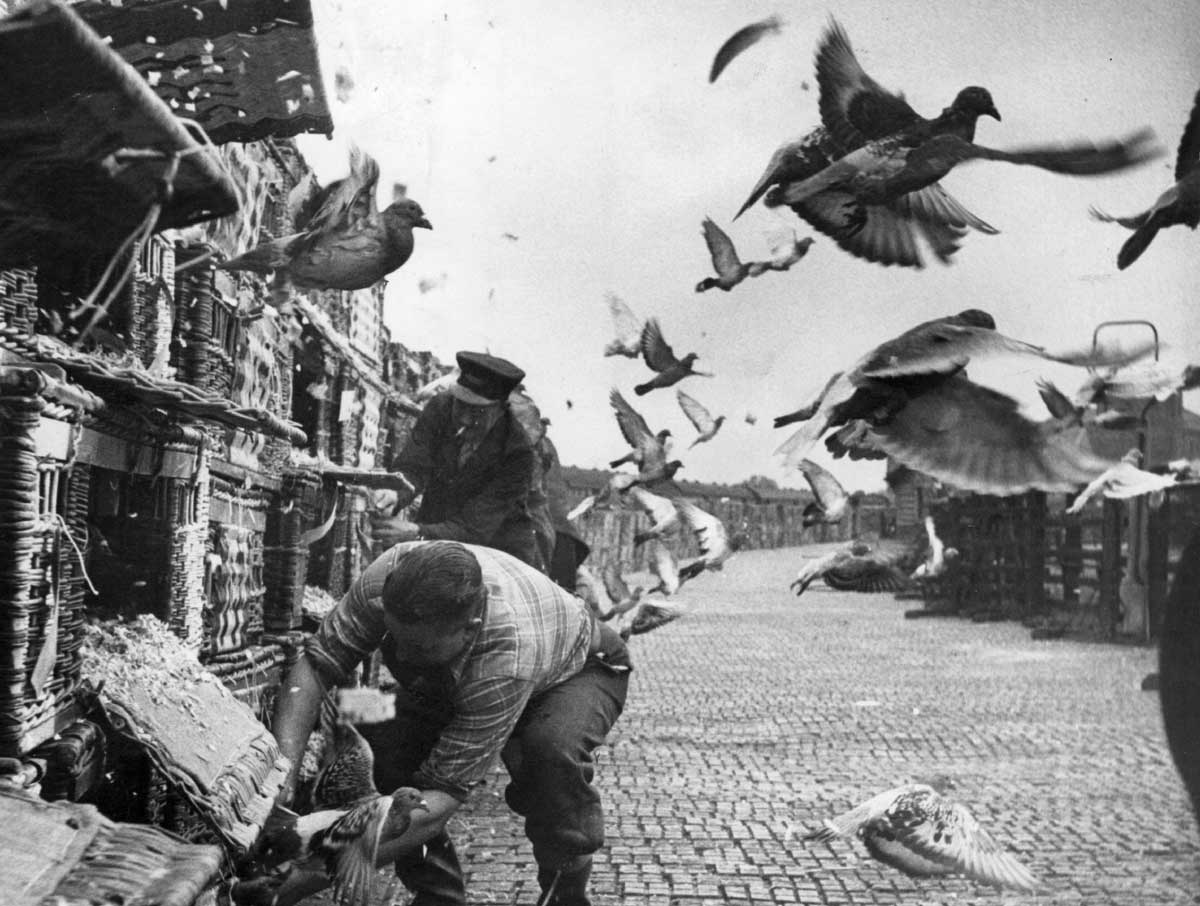
Men who spent their working lives underground found a new world of freedom in racing birds.
In Ron Berry’s 1982 story ‘Time Spent’, Lewis Rimmer, a 57-year-old Welsh miner, decides to die among his pigeons. After ‘nigh on 30 years’ hewing coal in the Fawr pit, his lungs are full of dust and, since he can no longer work, the mine is forced to make him redundant. He is entitled to compensation and, as he is reminded, the union should help out, too. But the thought terrifies him. His whole sense of meaning – his value as a ‘man’ – comes from being a collier. Unable to talk to his wife, he slouches out to his pigeon loft in the garden. It is the only other place he feels ‘himself’. He is closer to the birds than to anyone. Opening the hatch, he shoos them out gently. Then, as they swoop low over the valley, he curses quietly, puts a shotgun in his mouth and pulls the trigger.
Berry’s story is a harrowing portrait of the human cost of coal mining in South Wales during the industry’s dying days. It lays bare the health problems, financial pressures, family tensions and psychological strain felt by many miners. But it also shows how closely those experiences could be reflected in miners’ relationships with their pigeons and how much can be learnt about the social history of mining from the sport of pigeon racing.
Pam please tell Donnie these Hansennes do indeed have a lot of class. Large wings like I've never seen like maybe on a duck or owl. They have a lovely prance, and their Roman noses takes the cake. Love it! Keep up the good breeding Donnie.
Dear Don,
Just sending a gift for my appreciation for getting such nice Sion birds from you. When I get some youngsters from them, I will send you some photos. I am still planning on purchase another hen and cock. Have a good breeding season with your birds.
Received birds this morning here in Missouri. They are safe and both beautiful.
Beautiful female pigeon. Lovely mix of colors, fether quality and great posture. I figured her picture wasn't the best pose. The male is impressive and very masculine looking and I'm happy to say they are calm and get along very well together. Thanks again they are gorgeous....
The birds arrived today got them all tucked in the loft. You saved the best for last I think there nice birds ,,only sorry I didn't buy a couple of the other hens. Thanks alot
Hello. I received the birds today they look great. Thank you very much.
The Hen is here! Awesome bird & I can feel the power just holding her. She is very calm pigeon & that is always a plus. Thanks so much!
Hi this is Nate from Wisconsin. I just wanted to let you know the Andalusian cockbird made it here in good shape today. Thanks again!
Hi Don, birds are adapting well. I like their presentaion & calmness. Looks like they will fit in with my birds. I see what you mean about the BB. We'll see how he produces. Might b a genetic thing & go away when crossed with and unrelated hen.
Regards
Jim
Halo! Just picked up bird from post office. Thank you very much!
Thank you very much for your attention. the pigeons are beautiful and eat well. Im recommending your pigeons to my friends. I hope to buy more pigeons from you in the future. Thank you.
Arrived early and in perfect condition. I have 8 favorites.
