

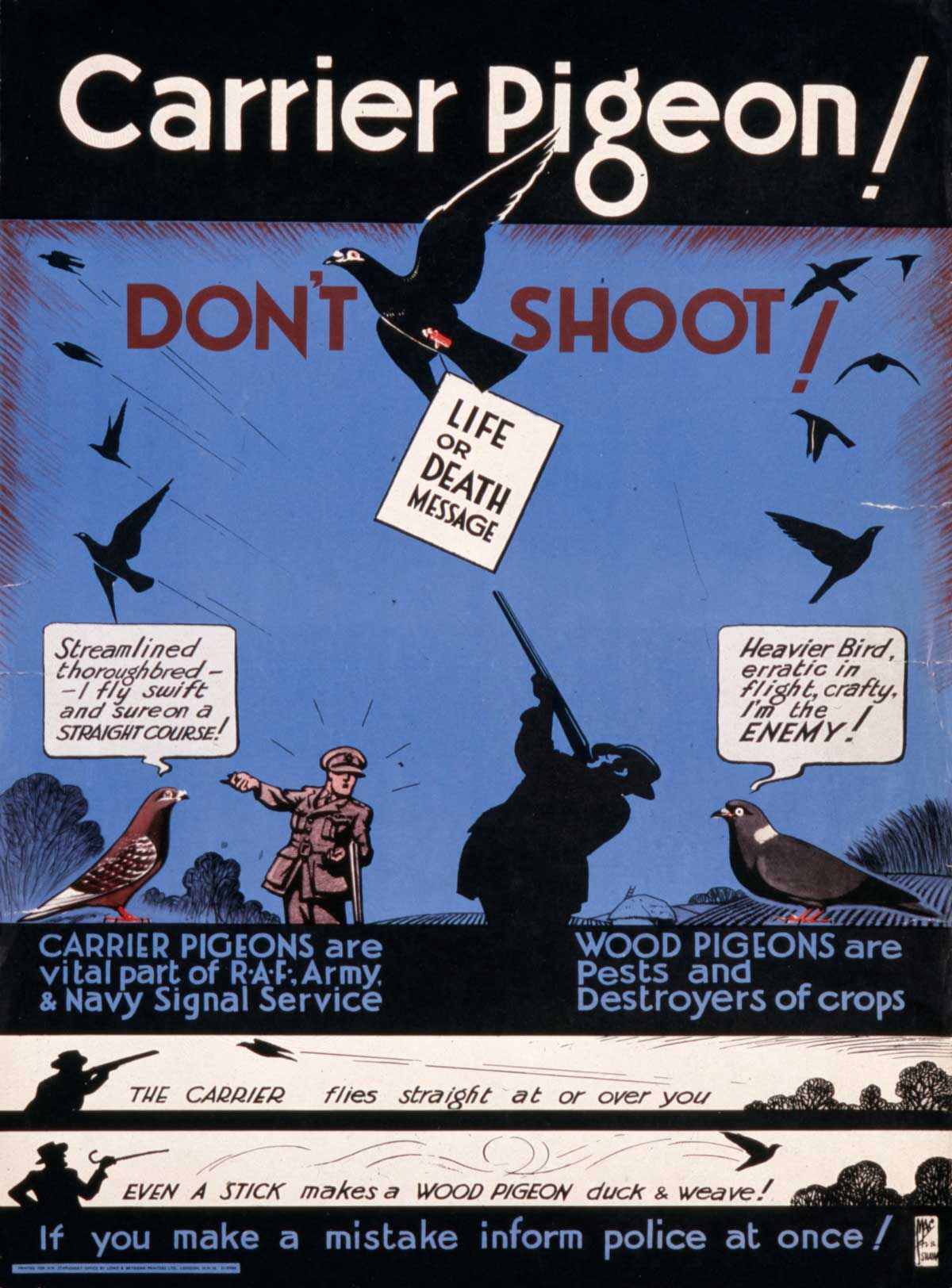
For these communities, pigeon racing was only possible because of dramatic transformations in the material conditions of working-class life. The passage of the 1874 Factory Act, introducing the 56.5-hour working week for women, and of the Coal Mines Regulation Act of 1906, limiting colliers to an eight-hour day, created the leisure time needed to undertake the arduous task of rearing and training a bird. So, too, the extension of the rail network in the 1840s and 1850s opened up the possibility of affordable travel and made long-distance races practicable for the first time. The abolition of taxes on newspapers in 1861 fostered the growth not only of mass-circulation newspapers, but also of the specialised journals essential to the bird enthusiast.
Pigeon racing was, however, a demanding sport, which most miners were able to pursue only with difficulty. Space was the most obvious problem. Pigeon lofts took up a lot of room. Today, most pigeon racing organisations recommend that each bird has a minimum of ten cubic metres of air; but even in the 19th century, when estimates were lower, the necessary volume could still be considerable. Most miners simply did not have the space; the few that did often struggled with unclean conditions. As George Orwell pointed out in 1937, miners’ homes in northern England tended to be old, insanitary and cramped. Of the ten examples he provided – from Wigan, Sheffield and Barnsley – most were too damp or dangerous for the attic to be of any use and none had a yard. Such conditions were, admittedly, not always typical; but Orwell nevertheless gives some sense of how difficult it could be simply to build a loft in older housing, right up until the eve of the Second World War. Newer, social housing was little better. Although Orwell recognised that ‘Corporation’ flats and houses were of markedly higher quality, residents were usually forbidden to keep either poultry or homing pigeons, usually because of the supposed risk to health. Occasionally, racing organisations managed to negotiate a compromise. But, even then, many enthusiasts felt that additional space had been won only at the cost of prohibitive restrictions.
Money was an even greater challenge. In comparison with other working-class pastimes, pigeon racing was expensive. Lofts cost a pretty penny. There were also clocks to buy or rent, baskets to carry the pigeons in; and, of course, the birds themselves. In the 1880s, miners looking to buy a pedigree bird could pay anything between £5 and £20. By the 1920s, prices had dropped somewhat; but, even then, reasonable quality pigeons cost in the region of 25s-£10. Membership of a club – essential for those who wanted to compete – was not cheap, either. In 1925 the Oughtibridge Homing Society in Yorkshire charged an annual fee of 17s; and it cost extra to race. Then there was the food. While a pigeon could do well enough on simple seeds, which could be found, cadged or bought in most villages without much difficulty, serious racers preferred a more sophisticated – and expensive – diet. Taken together, all this meant that pigeon racing was simply beyond the means of many miners. Orwell estimated that the average weekly earnings of a Yorkshire miner was £3 10s 6 ½d. After basic expenses had been met, little – if anything – was left for leisure activities. For those who raced pigeons, it entailed considerable financial sacrifice. More often than not, the families of racers often had to make do on little more than a wing and a prayer.
Pam please tell Donnie these Hansennes do indeed have a lot of class. Large wings like I've never seen like maybe on a duck or owl. They have a lovely prance, and their Roman noses takes the cake. Love it! Keep up the good breeding Donnie.
Dear Don,
Just sending a gift for my appreciation for getting such nice Sion birds from you. When I get some youngsters from them, I will send you some photos. I am still planning on purchase another hen and cock. Have a good breeding season with your birds.
Received birds this morning here in Missouri. They are safe and both beautiful.
Beautiful female pigeon. Lovely mix of colors, fether quality and great posture. I figured her picture wasn't the best pose. The male is impressive and very masculine looking and I'm happy to say they are calm and get along very well together. Thanks again they are gorgeous....
The birds arrived today got them all tucked in the loft. You saved the best for last I think there nice birds ,,only sorry I didn't buy a couple of the other hens. Thanks alot
Hello. I received the birds today they look great. Thank you very much.
The Hen is here! Awesome bird & I can feel the power just holding her. She is very calm pigeon & that is always a plus. Thanks so much!
Hi this is Nate from Wisconsin. I just wanted to let you know the Andalusian cockbird made it here in good shape today. Thanks again!
Hi Don, birds are adapting well. I like their presentaion & calmness. Looks like they will fit in with my birds. I see what you mean about the BB. We'll see how he produces. Might b a genetic thing & go away when crossed with and unrelated hen.
Regards
Jim
Halo! Just picked up bird from post office. Thank you very much!
Thank you very much for your attention. the pigeons are beautiful and eat well. Im recommending your pigeons to my friends. I hope to buy more pigeons from you in the future. Thank you.
Arrived early and in perfect condition. I have 8 favorites.
